
Food as Care and Punishment
Winter in SokchoThis flow traces food’s shifting role as nourishment, hospitality, family communication, and an instrument of the narrator’s self-punishment.
increasing Bearing strength in each event
 decreasing
Bearing strength in each eventdecreasingThe Mother’s Fish
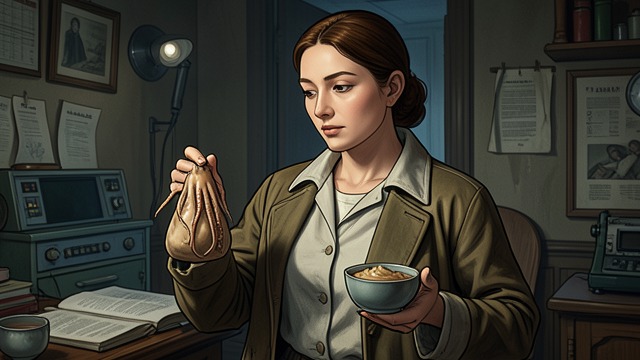
The Mother’s Fish
A gift from work
The narrator’s mother hands her a bag of small Octopus from the market and asks whether she needs bean paste. She watches her daughter closely and worries she has lost weight.
The narrator insists that she has been eating enough at the guest house.
Nourishment and monitoring
The exchange makes food an expression of love but also a way to monitor the daughter’s body. Care and scrutiny are difficult to separate in their conversations.
Food Offered to the Artist
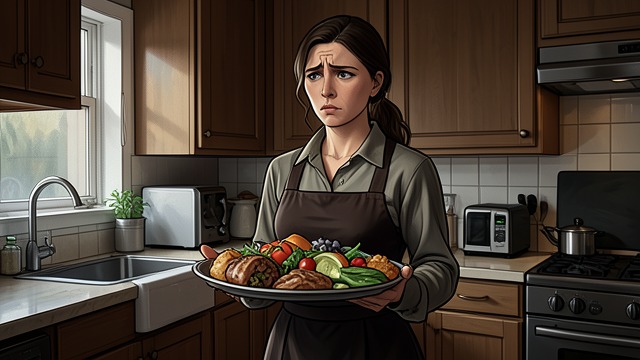
Food Offered to the Artist
Hospitality repeated
The narrator makes meals for Yan Kerrand, brings him a milder tray, and later prepares a French-style dish. He repeatedly fails to appear or chooses convenience-store food instead.
She feels hurt and resolves to stop making special efforts, but his work keeps drawing her attention.
Care without reciprocity
The repeated meals show her trying to build intimacy through service. His refusals expose how hospitality can become an unequal emotional investment.
Eating Under Observation
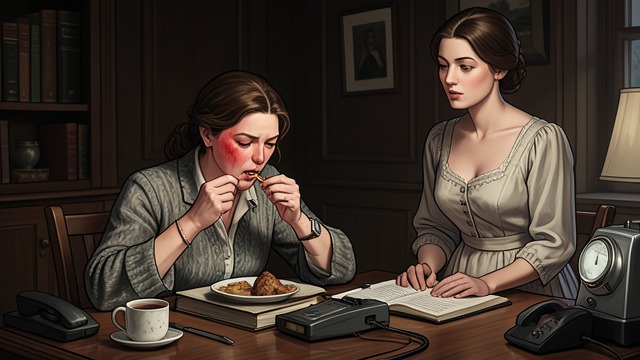
Eating Under Observation
Appetite becomes visible
At the family table, the narrator eats rapidly while her aunt comments on her body and eating. Her mother defends her, but the narrator remains unable to stop or comfortably continue.
The meal is crowded with attention to what she consumes and how she looks.
Pleasure turned punitive
Food that should mark a holiday becomes a source of shame and physical pain. The scene shows how social observation can transform nourishment into a test the narrator feels she is failing.
The Sausage Crisis

The Sausage Crisis
Compulsive consumption
The narrator eats Soondae frantically on the kitchen floor after her confrontation with Yan Kerrand. She continues despite disgust until she vomits bile onto her thighs.
Old Park finds her and quietly escorts her back to bed.
Care after punishment
The body becomes the site where emotional distress is expressed and punished. Old Park’s practical kindness interrupts the crisis but cannot resolve its causes.
A Dish Left Behind
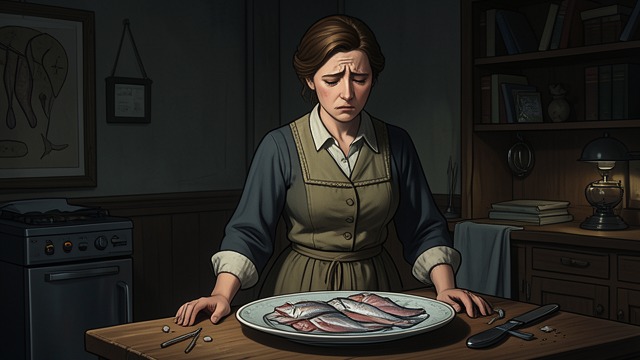
A Dish Left Behind
A careful preparation
The narrator prepares Fugu sashimi for Yan Kerrand, carefully removing dangerous organs and arranging delicate slices on a decorated platter. She imagines showing the dish to her mother.
She has invested time and skill in making the meal worthy of being seen.
An absent recipient
Yan Kerrand has already left, and the platter remains in his empty room. The prepared food becomes a final expression of care that arrives too late to be shared.
During the narrator’s first visit to the market
During the early weeks of Yan Kerrand’s stay
At the Seollal gathering
The night after the artist confrontation
The morning Yan Kerrand leaves
